
XDS Astana: What Chinese Capital Rescued - and What It Left Unchanged
For two decades Astana has been pro cycling's most resilient near-death experience. In 2024 it was stranded at the bottom of the WorldTour, facing relegation; a year later it finished fourth. The difference is Chinese money - but the 'first Chinese WorldTour team' label is looser than it looks.
For most of two decades the Astana team has been pro cycling's most resilient near-death experience: born from a doping scandal, repeatedly written off, and in 2024 stranded at the bottom of the WorldTour with relegation all but certain. A year later it finished the season fourth. The difference is Chinese money. Read closely, though, the deal that saved the franchise changed less than the new title suggests — and the "first Chinese WorldTour team" label is looser than it looks.
A franchise built on a collapse
Astana was assembled in 2006 out of the wreckage of Liberty Seguros–Würth, the Spanish team destroyed by the Operación Puerto blood-doping scandal. A consortium of Kazakh state companies, organised behind the rider Alexander Vinokourov, took the licence and named the team after the capital. Backing came — and still comes — from Samruk-Kazyna, Kazakhstan's sovereign wealth fund. The franchise's history is inseparable from crisis: Vinokourov himself tested positive for blood-doping at the 2007 Tour and was ejected; Alberto Contador won the 2007 Tour for Discovery Channel, not Astana, and delivered the team a Giro–Vuelta double only in 2008; the squad was barred from that year's Tour entirely. A cluster of later positives pushed the UCI to move to revoke the licence in 2015. The high points were real — Vincenzo Nibali's 2014 Tour de France win, Fabio Aru's 2015 Vuelta a España — but they sat on top of a structurally fragile operation that the Kazakh state kept alive.
The Cavendish detour and the relegation cliff
By 2023 the team had pinned its season, and much of its budget, on Mark Cavendish's pursuit of a record 35th Tour de France stage win. He got it — Stage 5 at Saint-Vulbas in 2024, breaking Eddy Merckx's long-standing 34 — then retired. It was a singular sporting achievement and a strategic cost: chasing one sprint record cost the UCI points the team needed to stay up. Astana scored just 6,532 points across 2024, the lowest of any WorldTour team, and entered 2025 21st in the three-year standings, roughly 5,000 points below the top-18 safety line. The franchise that had survived doping scandals and a licence revocation was about to be relegated out of the sport's top tier by arithmetic.
The XDS recapitalisation
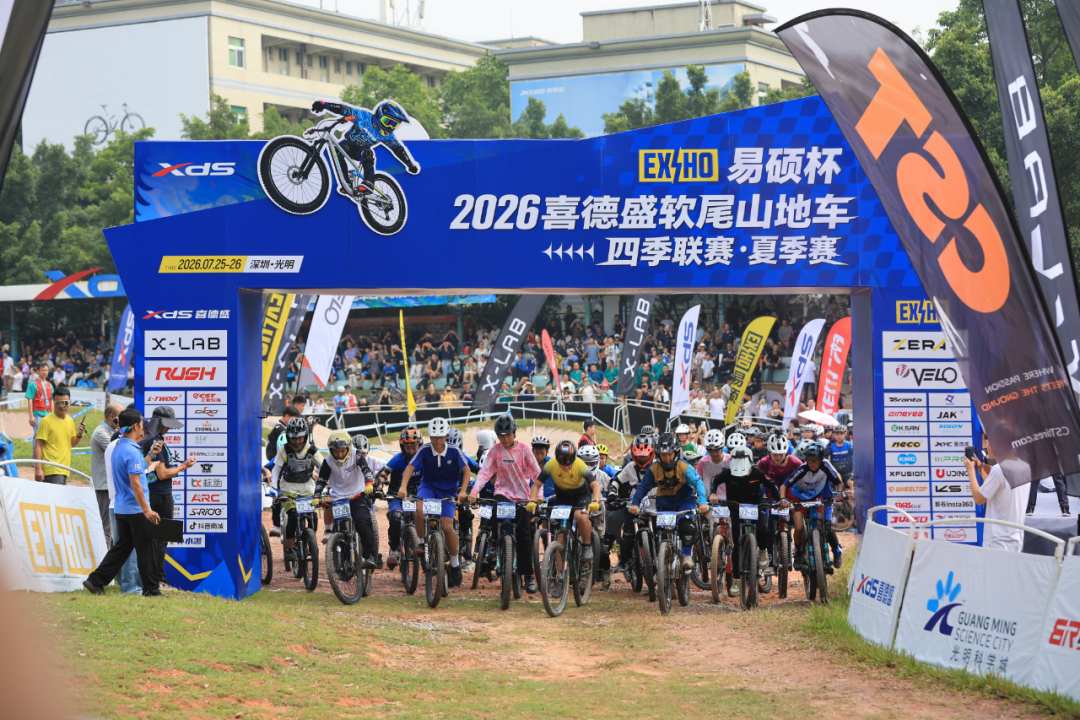
On 15 July 2024, during that Tour, XDS — 喜德盛, or Xidesheng Carbon-Tech, the Shenzhen manufacturer — was announced as a long-term investor and title sponsor, with financing, in the team's words, "at the level of leading WorldTour teams" and a commitment of at least five years. The team became XDS Astana from 2025, the first WorldTour squad with Chinese backing and part-ownership. The deal was negotiated under XDS chief executive Yancong Tan, and the rebrand runs through at least 2028. The recapitalisation funded a transfer-market overhaul — Alberto Bettiol, Wout Poels, Diego Ulissi, Sergio Higuita among the incoming — and a rebuild of the sports staff. The result was immediate and measurable: 32 victories in 2025, a jump to fourth in the UCI team rankings, and retention of the WorldTour licence for the 2026–2028 cycle. From last to fourth in a season is not narrative; it is a points table.
What is, and isn't, Chinese
This is where the label needs correcting. XDS brought money, a bike, and a title. It did not bring a roster. The 30-rider squad is roughly a third Italian, with a Kazakh core and a Latin American climbing block; its leaders — Ulissi, the breakout Christian Scaroni, and Bettiol, a former Tour of Flanders winner — are European. There is exactly one Chinese rider: Su Haoyu, signed for 2025 and 2026 as the 30th and final roster spot, a developing domestique with no Grand Tour starts, who in 2026 became the first WorldTour-team rider to win the Chinese national road race title. He is the first Chinese man on a WorldTour team since Wang Meiyin in 2019, and he is a single developmental place, not a pipeline. The team's sporting identity — sky blue, Kazakh sovereign backing, an Italian-heavy roster — did not turn Chinese because the sponsor did. China's footprint at the top of the sport is, for now, commercial and symbolic rather than athletic.
The kit and the supply chain
The equipment list tells the same story precisely. The jersey kept its sky-blue base and Kazakh sponsor logos; XDS added shoulder colour and its title wordmark, an evolution rather than a redesign. The bikes changed: XDS's premium sub-brand X-LAB replaced Wilier from 2025, the team racing the aero AD9 — with a second frame, the RT8, added in 2026 — the one piece of the WorldTour that is now unambiguously Chinese-made. Almost nothing else is. The groupset is Shimano Dura-Ace, the wheels Vision, the tyres Continental, the saddle Prologo: the same Western incumbents the rest of the peloton uses. The kit maker was Italy's Biemme in 2025 and France's EKOÏ from 2026; the helmet, long Limar's, became XDS-branded from May 2025. New for 2026 are China's Magene (computers) and Taiwan's TRiPEAK (bearings). A Chinese frame and a Chinese computer do not make a Chinese supply chain.
What the season earned, and what it didn't settle
The revival is real and the rescue worked: a team that was being relegated is fourth, with its licence secured and a sponsor committed through 2028. That earns the benefit of the doubt that earlier Astana eras never reliably held. What it does not settle is the question the investment was really meant to answer — whether sponsoring onto the WorldTour converts into owned brand equity for a Chinese manufacturer, or whether it remains a rented seat at a table the team still serves rather than leads. One strong season is evidence the recapitalisation was competent; it is not yet evidence the model compounds. The honest position is that XDS Astana is a genuinely rescued franchise with a genuine Chinese commercial foothold — and not yet a Chinese team.
Sources: ProCyclingStats; Cyclingnews; Escape Collective; Cyclist; CyclingUpToDate; Wikipedia; team official site (xds-astana.com); Tour de France official.
專欄作者
多位作者輪流主筆,從產業、賽事、市場與技術角度,提供不被規格表綁住的分析視角。